Rechercher dans ce blog

Tuesday, January 31, 2023

The Trick For Getting The Most Juice Out Of Your Lemons - Best Lemons For Juicing - Delish

https://ift.tt/iPSb8Uy

We’ve all been there: Desperately squeezing a lemon over a bowl in hopes that we’ll get anything out of it, even a drop. It's not exactly a fun time. We can all agree that the pre-squeezed stuff in the lemon-shaped bottle isn’t great—and is it even real juice? But it’s easy to get so fed up with dry citrus that we might actually consider buying it.

There are lots of hacks for juicing citrus floating around the internet. Microwave your lemons before juicing. Roll them against the countertop. Cut them top to bottom instead of around the equator. And my personal favorite: buy a citrus squeezer. But none of these tricks will coax juice from a lemon or lime that doesn’t have much juice to begin with. The best way to get more juice out of your citrus is to choose the correct fruit from the supermarket.

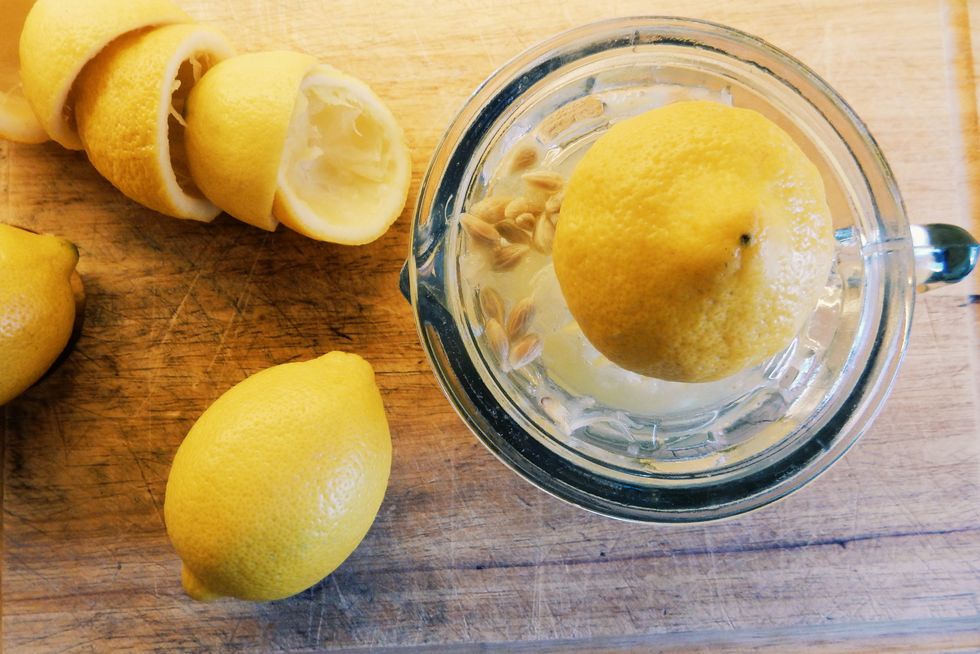
When we think of lemons, most of us picture the gorgeous, bright yellow ones with a thick, textured peel. These lemons may look great on Instagram, but they contain the least amount of juice. The best lemons for juicing are actually the ugliest. They are pale yellow in color with smooth, thin skin. They should feel slightly soft and—surprise—a bit juicy when you pick them up.

The same rule applies for limes: Pale green, thin-skinned limes will yield much more juice than their darker, bumpy-skinned siblings. And if you find one with balding brown patches on it, even better.
Merethe Svarstad Eeg / EyeEm//Getty Images

So, how do you make sure you’re getting the right kind of lemons when you go to the store? Well, start by actually going to the store. Grocery-delivery services are convenient, but there’s no way to ensure that whoever is packing your order will give you that imperfectly perfect citrus for juicing. (And if you’re thinking about putting it in the “notes” or “special request section,” forget about it.)

When you’re in the store, skip the prepackaged bags. You can’t possibly judge anything when it’s sealed inside those nets. Instead, handpick your citrus, one by one, from the bulk produce bin. Pick them up and run your fingertips over their skin. Give them a light squeeze to assess their juicy potential, then choose the best candidates.

When you get home, store your lemons in a dry zip-top bag in the fridge. They’ll keep much longer there than in that pretty bowl on your counter. Besides, if you bought the right ones, they’re not exactly beautiful specimens anyway, are they?

Headshot of Taylor Ann Spencer

Assistant Food Editor

Taylor Ann Spencer is the assistant food editor at Delish, where she develops recipes, creates recipe videos, and styles food. With a background in writing and theater as well as professional cooking, she enjoys sharing her love for global flavors and all things baking through informational posts, hosted videos, and just plain everyday conversations. When she's not cooking, she's brainstorming her next culinary mash-up. Mac 'n' cheese chili rellenos, anyone?

Adblock test (Why?)


"food recipes" - Google News
February 01, 2023 at 01:20AM
https://ift.tt/GIeVfzJ

The Trick For Getting The Most Juice Out Of Your Lemons - Best Lemons For Juicing - Delish
"food recipes" - Google News
https://ift.tt/BNHlRWy
https://ift.tt/iPSb8Uy

Friday, January 27, 2023

‘This Is the Best Chicken I’ve Ever Had’ - The New York Times

https://ift.tt/YaIcdHM

A dash of gin and a smattering of fried sage make these sautéed chicken breasts more than the usual weeknight dinner.

When Amy Thielen was a child, she was a gabber: someone who needed to verbalize the thoughts out of her head before they overwhelmed her. To “pour the foam off,” as she put it. While her mother cooked at the stovetop, the young Thielen sat on a yellow vinyl-padded swivel stool at the kitchen island, twirling and talking her mother’s ear off about seventh grade. This proximity to the “action” of cooking, a sort of learning by absorption, would form the foundation of Thielen’s culinary education as she moved through her life later as a restaurant line cook and cookbook author. Details like how to cut the mushrooms and when to flip the chicken, and what to do with the fond that collects on the bottom of the pan (make a sauce, of course). “It was like I could be watching Food Network,” she said to me over the phone, “but it was live.”

Years later, Thielen would surmise that attention to such details was the key to what I consider her best chicken breast recipe to date, from her forthcoming cookbook, “Company.” Here’s the idea: If you treat something as humble as a chicken dinner with the care you would, say, a butter-basted rib-eye or a miso-glazed cod fillet, then the end result will be restaurant-quality. The best cooking requires attention — to your guests, to your food, to yourself and your movements. “Be prepared to stand stoveside and watch the bottom of the pan with predatory focus,” she advises in the recipe’s headnote, “because if you let yourself be called away, the precious browned foundation will burn and the whole sauce will be thrown.”

The dish is a culmination of all the minute details that make something good great.

Though she fondly recalls her mother cooking in sturdy Club Aluminum pans, these days she recommends using stainless steel, something “semistick.” That’s how you get what Thielen’s grandmother used to call pan schmutz (and what Thielen calls, in her first cookbook, “The New Midwestern Table,” pan smut, “that delicious stuck-on crud, the pure flavor shellacked to the bottom of the pan”). This simple feat of magic is the basis of many a stew, sauce and chicken supper.

Most pan sauces rely on stock or wine for deglazing, but this one has a twist. “If someone were to stand over a pan of sautéing chicken holding an ice-cold martini and happen to slosh it into the pan, you would have this sauce,” Thielen writes. The gin idea came from her time cooking on the line at the French restaurant Bouley, which closed in 2017. But that version used duck, and the broth was a concentrate that took forever to make. (Thielen’s chicken is a little more streamlined, though still detailed.) The dish is, as she learned in restaurant kitchens like Bouley, a culmination of all the minute details that make something good great.

As with any recipe, this golden, crispy-skinned chicken — complete with killer pan sauce — could be considered more of a general technique than a strict formula, one you can adapt to your own kitchen. But there’s one caveat: The breast should still have its skin. In most supermarkets in the United States, chicken breasts are sold either boneless and skinless or bone-in and skin-on. Boneless works, but “if there’s no skin, there’s no recipe,” she told me. That’s because the chicken cooks almost entirely on the skin side, relying on the insulation, and fat, to keep the meat moist, not to mention that you end up with the most crackly crust. To achieve this, Thielen advises carving the meat off the rib cage of a bone-in breast, or do as she does in the remote woods of northern Minnesota, where she lives with her family: Remove the breasts from a whole bird yourself. If we want nice things, sometimes we have to work for them a bit.

When I made this chicken for the first time, for my boyfriend and me, he sat at the kitchen island talking to me while I cooked. I’m a terrible multitasker, but I can listen. Like a good true-crime podcast on a long road trip, his chitchat helps me maintain my focus, and when I don’t have a third or fourth hand to dry the sage leaves before I fry them in the butter or to pound the breasts into an even thickness, I know I can turn to him. Every cook needs a gabber, someone to keep you company in the kitchen, but even better and more useful are their taste buds. When he took a bite, he said, “This is the best chicken I’ve ever had.” I agreed. The perfectly cooked white meat with the savory, juniper-pierced jus, in between chomps of crispy sage leaves, is full of delights and surprises you can achieve only by paying close attention.

This is, for me, the chicken dinner of chicken dinners, comforting and familiar but fancy enough to cook for company, or for Valentine’s Day. Even better if your date is sitting at the kitchen island gabbing.

Recipe: Crispy Smashed Chicken Breasts With Gin and Sage

Adblock test (Why?)


"food recipes" - Google News
January 25, 2023 at 05:00PM
https://ift.tt/r18lzjY

‘This Is the Best Chicken I’ve Ever Had’ - The New York Times
"food recipes" - Google News
https://ift.tt/ZFXnepr
https://ift.tt/YaIcdHM

Thursday, January 26, 2023

Alon Shaya Pairs His Pimiento Cheese with Fried Saltines for a Winning Super Bowl Snack - PEOPLE

https://ift.tt/YaIcdHM

Alon Shaya's 25-minute pimiento cheese dip makes for the "perfect party snack for watching sports games or getting the night started," says the chef-owner at Saba in New Orleans and Safta in Denver.

To pair with it, Shaya uses ghee, or clarified butter, to turn up the flavor of a simple cracker. "Ghee can be cooked for longer and at a higher temperature than butter so it will impart the same rich flavor without scorching. Using it to fry the saltines is easy to do and transports a common pantry item into a real showstopper," he says.

"The final dish should have a kick of spice from the pimento peppers, tang from the hot sauce and vinegar and a creamy, spreadable texture," adds Shaya. "A rich, buttery saltine that helps to balance the flavors."

Alon Shaya's Pimiento Cheese with Butter-Crisped Saltine Crackers

8 oz. aged sharp white Cheddar cheese, grated (about 2 cups)

8 oz. aged sharp yellow Cheddar cheese, grated (about 2 cups)

½ cup mayonnaise

½ cup thinly sliced scallions (from 6 scallions)

1 (4-oz.) jar pimientos, drained and chopped

2 Tbsp. apple cider vinegar

2 Tbsp. hot sauce

1 tsp. kosher salt

½ tsp. freshly ground black pepper

½ cup ghee (clarified butter)

1 (4-oz.) sleeve saltine crackers (about 36 crackers)

1. Stir together Cheddar cheeses, mayonnaise, scallions, pimientos, apple cider vinegar, hot sauce, salt and pepper in a large mixing bowl until fully combined.

2. Melt ghee in a large skillet over medium heat until shimmering. Working in batches, add saltines to skillet in a single layer. Fry until crisp and golden, about 30 seconds per side. Transfer crackers to a paper-towel-lined plate to drain. Repeat with remaining crackers, adding additional ghee to skillet as needed. Serve crackers with pimiento cheese. (Pimiento cheese can be stored in an airtight container in the refrigerator for up to 5 days.)

Serves: 12
Active time: 25 minutes
Total time: 25 minutes

Adblock test (Why?)


"food recipes" - Google News
January 27, 2023 at 05:46AM
https://ift.tt/S4wORDJ

Alon Shaya Pairs His Pimiento Cheese with Fried Saltines for a Winning Super Bowl Snack - PEOPLE
"food recipes" - Google News
https://ift.tt/ZFXnepr
https://ift.tt/YaIcdHM

Wednesday, January 25, 2023

‘This Is the Best Chicken I’ve Ever Had’ - The New York Times

https://ift.tt/B8olA7W

A dash of gin and a smattering of fried sage make these sautéed chicken breasts more than the usual weeknight dinner.

When Amy Thielen was a child, she was a gabber: someone who needed to verbalize the thoughts out of her head before they overwhelmed her. To “pour the foam off,” as she put it. While her mother cooked at the stovetop, the young Thielen sat on a yellow vinyl-padded swivel stool at the kitchen island, twirling and talking her mother’s ear off about seventh grade. This proximity to the “action” of cooking, a sort of learning by absorption, would form the foundation of Thielen’s culinary education as she moved through her life later as a restaurant line cook and cookbook author. Details like how to cut the mushrooms and when to flip the chicken, and what to do with the fond that collects on the bottom of the pan (make a sauce, of course). “It was like I could be watching Food Network,” she said to me over the phone, “but it was live.”

Years later, Thielen would surmise that attention to such details was the key to what I consider her best chicken breast recipe to date, from her forthcoming cookbook, “Company.” Here’s the idea: If you treat something as humble as a chicken dinner with the care you would, say, a butter-basted rib-eye or a miso-glazed cod fillet, then the end result will be restaurant-quality. The best cooking requires attention — to your guests, to your food, to yourself and your movements. “Be prepared to stand stoveside and watch the bottom of the pan with predatory focus,” she advises in the recipe’s headnote, “because if you let yourself be called away, the precious browned foundation will burn and the whole sauce will be thrown.”

The dish is a culmination of all the minute details that make something good great.

Though she fondly recalls her mother cooking in sturdy Club Aluminum pans, these days she recommends using stainless steel, something “semistick.” That’s how you get what Thielen’s grandmother used to call pan schmutz (and what Thielen calls, in her first cookbook, “The New Midwestern Table,” pan smut, “that delicious stuck-on crud, the pure flavor shellacked to the bottom of the pan”). This simple feat of magic is the basis of many a stew, sauce and chicken supper.

Most pan sauces rely on stock or wine for deglazing, but this one has a twist. “If someone were to stand over a pan of sautéing chicken holding an ice-cold martini and happen to slosh it into the pan, you would have this sauce,” Thielen writes. The gin idea came from her time cooking on the line at the French restaurant Bouley, which closed in 2017. But that version used duck, and the broth was a concentrate that took forever to make. (Thielen’s chicken is a little more streamlined, though still detailed.) The dish is, as she learned in restaurant kitchens like Bouley, a culmination of all the minute details that make something good great.

As with any recipe, this golden, crispy-skinned chicken — complete with killer pan sauce — could be considered more of a general technique than a strict formula, one you can adapt to your own kitchen. But there’s one caveat: The breast should still have its skin. In most supermarkets in the United States, chicken breasts are sold either boneless and skinless or bone-in and skin-on. Boneless works, but “if there’s no skin, there’s no recipe,” she told me. That’s because the chicken cooks almost entirely on the skin side, relying on the insulation, and fat, to keep the meat moist, not to mention that you end up with the most crackly crust. To achieve this, Thielen advises carving the meat off the rib cage of a bone-in breast, or do as she does in the remote woods of northern Minnesota, where she lives with her family: Remove the breasts from a whole bird yourself. If we want nice things, sometimes we have to work for them a bit.

When I made this chicken for the first time, for my boyfriend and me, he sat at the kitchen island talking to me while I cooked. I’m a terrible multitasker, but I can listen. Like a good true-crime podcast on a long road trip, his chitchat helps me maintain my focus, and when I don’t have a third or fourth hand to dry the sage leaves before I fry them in the butter or to pound the breasts into an even thickness, I know I can turn to him. Every cook needs a gabber, someone to keep you company in the kitchen, but even better and more useful are their taste buds. When he took a bite, he said, “This is the best chicken I’ve ever had.” I agreed. The perfectly cooked white meat with the savory, juniper-pierced jus, in between chomps of crispy sage leaves, is full of delights and surprises you can achieve only by paying close attention.

This is, for me, the chicken dinner of chicken dinners, comforting and familiar but fancy enough to cook for company, or for Valentine’s Day. Even better if your date is sitting at the kitchen island gabbing.

Recipe: Crispy Smashed Chicken Breasts With Gin and Sage

Adblock test (Why?)


"food recipes" - Google News
January 26, 2023 at 12:44AM
https://ift.tt/AkKYwxM

‘This Is the Best Chicken I’ve Ever Had’ - The New York Times
"food recipes" - Google News
https://ift.tt/khpYBdf
https://ift.tt/B8olA7W

Monday, January 23, 2023

20+ High-Protein Breakfast Recipes That Aren't Eggs - EatingWell

https://ift.tt/Mv95r34

This healthy smoothie is not only delicious--it also boosts your daily dose of anti-inflammatory foods. It starts with a base of creamy gut-friendly kefir and includes cherries, which can lower the inflammatory marker C-reactive protein. Heart-healthy fats in avocado, almond butter and chia seeds deliver additional anti-inflammatory compounds to the body, while spinach offers a mix of antioxidants that sweep up harmful free radicals. Fresh ginger adds zing, plus a compound called gingerol, which preliminary studies suggest may improve inflammatory markers of heart disease if consumed daily.

Adblock test (Why?)


"food recipes" - Google News
January 21, 2023 at 06:19PM
https://ift.tt/ZY9izOV

20+ High-Protein Breakfast Recipes That Aren't Eggs - EatingWell
"food recipes" - Google News
https://ift.tt/a4EUBsJ
https://ift.tt/Mv95r34

Sunday, January 22, 2023

This Au Kouign-Amann Recipe Is Worth Making - The New York Times

https://ift.tt/Mv95r34

I made this Breton-style cake at least half a dozen times to perfect it. Here’s what it taught me about grief.

On Avenue du Mont-Royal Est in the heart of Montreal’s Plateau neighborhood is a patisserie called Au Kouign-Amann, specializing in a classic version of the pastry that gives it the name.

The kouign-amann (Breton for “butter cake”) has always been among my favorite pastries for how it manages to convey comfort with a few simple ingredients, but I’ll never forget my first bite of the bakery’s version. I leaned against the slate-blue framed glass windows of the brick storefront on a warm late-June afternoon, holding two slightly warm slices tucked neatly in a brown bag, and took my first bite. I walked away wondering what had just happened to me. That delicate slice had managed to balance light buttery layers with a deep nutty flavor and slightly caramelized crust.

And, in that moment, balance was just what I needed.

I was on holiday with my family of four for the first time, and the preceding weeks had been deeply challenging. Covid had made its rounds through our home, starting with Aṣa, my 3-year-old. Within 12 hours of a positive test, she had a fever so high that she had a febrile seizure, losing consciousness. Another 10 hours in a hospital passed before she woke again, an ordeal that left me feeling like my spirit had fled my physical body. She immediately wanted everything to go back to normal, asking for her iPad and demanding to go home. But I wasn’t anywhere near normal — and wouldn’t be for a very long time. For weeks afterward, I experienced a kind of grief that seemed to follow me everywhere like a ghostly companion, casting its shadow across my work, lingering in my Brooklyn home and coming with me on our trip.

I sought refuge in the kitchen, where I’ve always found grief to be at its most reasonable. Grief occupies all of the senses, but in the kitchen, it neither aids in my cooking nor meddles with it.

A round of a butter mixture is placed on top of the dough to begin the lamination process.Kelly Marshall for The New York Times. Food Stylist: Yossy Arefi. Prop Stylist: Paige Hicks.
The dough is folded over the butter to create a kind of package, then rolled and folded repeatedly to create alternating layers of butter and dough. This process results in flaky layers in the finished pastry.Kelly Marshall for The New York Times. Food Stylist: Yossy Arefi. Prop Stylist: Paige Hicks.

So I rolled up my sleeves and made as many recipes as I could in an attempt to gently nudge my spirit back into my body. I kept returning to that kouign-amann, and what I had experienced outside the bakery. I wanted anything to keep me from the memory of Aṣa’s small, sweaty body, shaking and unconscious, being loaded into an ambulance.

I needed an all-consuming project, something that didn’t come easily to me. And that’s when I reached out to the patisserie in Montreal and asked if I could observe a shift.

Nicolas Henry, the bakery’s chef and owner, encouraged me to do more than simply watch. He offered me the opportunity to put on an apron and chef’s whites and work a morning shift. So I did.

I talked with Mr. Henry and his assistant Agnès Julià Maset about my search for a recipe that demanded the kind of attention and determination that would keep my mind occupied, a recipe like kouign-amann.

I nodded as Mr. Henry focused on the dull golden dough on the wooden counter before us. His version starts out as simple dough, leavened with both sourdough starter and yeast. The dough is left to ferment and develop its deep flavor overnight, then laminated with a mix of creamed butter and sugar. Unlike the mini kouignettes I have encountered, Mr. Henry’s is made in a skillet as a large, round cake.

Back in Brooklyn once more, I set about trying to make my own version, recalling what Ms. Maset had said as I worked beside her: Keep your hands moving and work with intention. Work the dough as little as you can. Don’t touch it until you know what your next steps will be.

Serve a slice of kouign-amann with a cup of coffee for an ideal breakfast or afternoon snack.Kelly Marshall for The New York Times. Food Stylist: Yossy Arefi. Prop Stylist: Paige Hicks.

Making a kouign-amann at home is no small feat. Each step is simple and straightforward, but you have to work quickly and with precision. As with most laminated doughs, there is an ease in working the dough that comes only with time.

And time offers many gifts. It creates distance from grief, as each day layers over the experience like thin sheets of ice, obscuring it but never fully concealing it. It also allows you to grow in a practice.

I made the pastry six times over a period of months before I felt assured enough to work with ease. Each kouign-amann seemed to mark the passage of time, each one a step forward as I got closer to uncovering the secrets in Mr. Henry’s dough and farther from my grief.

I’m not recreating Mr. Henry’s method exactly here, though it’s close. For the real thing, you’ll have to go to Montreal. But for a recipe that feels like healing, a gift in process and result — warm slices of a yeast-risen pastry with soft layers, deep buttery flavor and a chewy, caramelized top — take the time to make mine.

Adblock test (Why?)


"food recipes" - Google News
January 21, 2023 at 04:45AM
https://ift.tt/LnsCNXA

This Au Kouign-Amann Recipe Is Worth Making - The New York Times
"food recipes" - Google News
https://ift.tt/a4EUBsJ
https://ift.tt/Mv95r34

Friday, January 20, 2023

Easy Quick Pasta Recipes - The New York Times

https://ift.tt/xbGUzFW

Start an episode of “Abbott Elementary” while you cook, and dinner will be on the table by the time the credits roll.

Cozy but quick, these speedy pasta recipes are made with affordable ingredients you probably either have on hand or can easily procure with a quick trip to the grocery store. For convenience’s sake, they also all call for a full pound of pasta, but most can be easily halved.

Julia Gartland for The New York Times. Food Stylist: Ali Slagle.

Colu Henry’s take on the Italian American classic is rich and bright. If you don’t have pancetta, feel free to skip it, or use bacon for smokiness.

Ryan Liebe for The New York Times. Food Stylist: Barrett Washburne.

Cabbage, that much-underappreciated vegetable, cooks down into something soft, sweet and silky in this pasta dish from Hetty McKinnon. Roasted walnuts add crunch and a hit of hearty protein.

Recipe: Caramelized Cabbage and Walnut Pasta

Andrew Purcell for The New York Times. Food Stylist: Barrett Washburne.

Gnocchi is delicious boiled and slathered in red sauce, but when the little store-bought potato dumplings are browned and crisped — as they are in this 20-minute recipe from Ali Slagle — their insides stay chewy and soft, so you can have the best of both worlds.

Recipe: Crisp Gnocchi With Brussels Sprouts and Brown Butter

Linda Xiao for The New York Times. Food Stylist: Monica Pierini.

Canned clams, a cheap, flavorful pantry hero, don’t get the accolades they deserve. In this recipe from Kay Chun, they’re combined with hothouse cherry tomatoes — which are fairly decent all year long — for a briny and bright pasta dish that feels classic yet fresh.

Andrew Purcell for The New York Times. Food Stylist: Carrie Purcell.

This super-simple pasta from Alexa Weibel may have only five ingredients, but its miso, butter and Parmesan provide sophisticated nuance and complexity.

Recipe: Five-Ingredient Creamy Miso Pasta

Armando Rafael for The New York Times. Food Stylist: Simon Andrews.

Pasta alla gricia is typically made with guanciale (cured pork jowl), but salami, that piquant stalwart of lunchboxes, gets a star turn in this clever pasta from Ali Slagle.

Recipe: Salami Pasta Alla Gricia

Con Poulos. Food Stylist: Simon Andrews.

Kay Chun takes the classic Italian combination of sausage and peppers and tosses them with pasta and broccoli for a family-friendly dish that hits all of the right notes.

Recipe: Sausage and Peppers Pasta With Broccoli

Kate Sears for The New York Times. Food Stylist: Hadas Smirnoff.

Genevieve Ko has the admirable habit of making classic, much-loved recipes even better with her clever additions and tweaks. Case in point: Here, she adds fresh spinach and chile crisp to traditional pasta Alfredo for something modern and lively, not heavy and nap-inducing.

Recipe: Chile Crisp Fettuccine Alfredo With Spinach

Kate Sears for The New York Times. Food Stylist: Hadas Smirnoff.

Melissa Clark combines crisped gnocchi and garlicky sautéed shrimp in this delightful riff on the classic shrimp scampi. Serve with a crunchy green salad and crusty bread.

Recipe: One-Pan Shrimp Scampi With Crispy Gnocchi

David Malosh for The New York Times. Food Stylist; Simon Andrews.

In Italy, “Al Baffo” is said to mean “it is so good you’ll lick your whiskers.” This dish from Anna Francese Gass is made by combining pasta, puréed tomatoes, shallots, deli ham and heavy cream. The ingredients are simple, but the outcome feels extravagant.

Recipe: Penne Al Baffo (Creamy Tomato Ham Pasta)

Dane Tashima for The New York Times. Food Stylist: Barrett Washburne.

In this recipe from Ali Slagle, fresh store-bought tortellini are cooked directly in the sauce instead of a big pot of water, so they’re seasoned all the way through. Bacon, sweet corn (frozen or fresh) and rosemary make it substantial enough for any night of the year.

Christopher Testani for The New York Times. Food Stylist: Simon Andrews.

Wafu directly translates to “Japanese style,” and in this dish from Hana Asbrink, spaghetti is combined with Japanese mushrooms in an umami-rich soy-butter sauce.

Recipe: Mushroom Wafu Pasta

Adblock test (Why?)


"food recipes" - Google News
January 21, 2023 at 01:33AM
https://ift.tt/xLYmyBf

Easy Quick Pasta Recipes - The New York Times
"food recipes" - Google News
https://ift.tt/u8mdpXV
https://ift.tt/xbGUzFW

Search

Featured Post

Weekly meal planner: Tex Mex family favourites - Good Food

https://ift.tt/uCX5ivW [unable to retrieve full-text content] Weekly meal planner: Tex Mex family favourites    Good Food "food rec...

Postingan Populer